 North Carolina

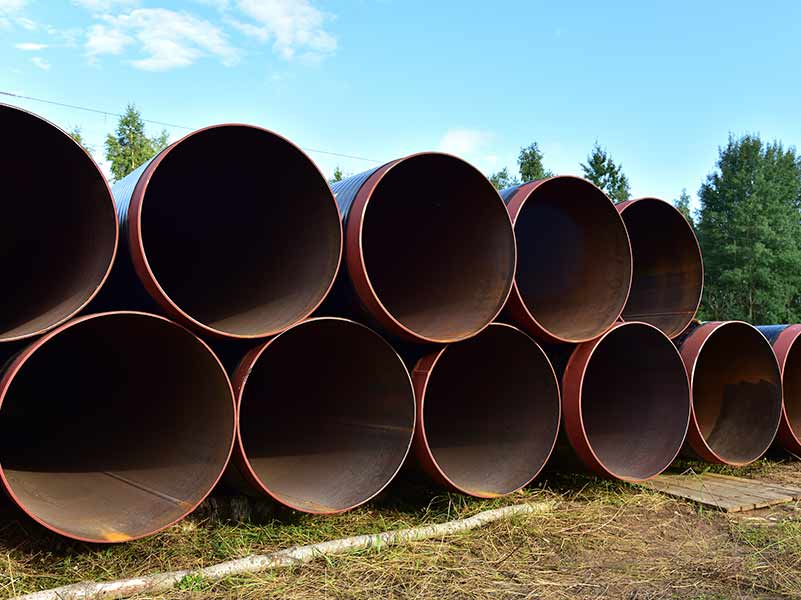
By John Murawski – from News & Observer
The Atlantic Coast Pipeline is doubling down on cutting trees on hundreds of private properties in North Carolina. Now a federal judge has taken the unusual step of barring the energy consortium from clearing trees on two rural homesteads.
U.S. District Judge Terrence Boyle said the interstate pipeline developer must first pay the two landowners. Only then can its chainsaw crews enter their properties.
The ruling comes as the planned 600-mile natural gas project runs up against deadlines. The project is already more than a year behind schedule, and the deadlines could add months to the construction timeline. Charlotte’s Duke Energy and Richmond’s Dominion Energy lead the Atlantic Coast Pipeline. It plans to bring vast supplies of natural gas to North Carolina from fracking operations in Pennsylvania and West Virginia.
Tree-Cutting Deadline and Bird Nesting Season
The pipeline developers say they face a March 31 deadline to cut down trees. After that, the nesting season for migratory birds begins in Eastern North Carolina. Anticipating delays, the Atlantic Coast Pipeline asked last Thursday for a six-week federal extension, until May 15. The extra time would let crews finish the tree-cutting. Workers could then spend the summer and autumn trenching and laying pipe.
If it receives an extension, the pipeline company has vowed to visually survey every tree for nests and eggs. It promises to avoid chopping down bird-occupied trees until the newly hatched fledglings have flown away.
Judge Rejects the Pipeline’s Public Interest Argument
In last week’s private property dispute, Boyle rejected the pipeline’s arguments. The developers argued that their schedules and corporate priorities serve the public interest. They said those priorities should take precedence over the concerns of the local landowners.
In his decision Friday, the judge was unmoved by the developers’ urgent plea. They said they must begin cutting trees as soon as possible. Otherwise they risk blowing the deadline and delaying construction on the $6 billion project until next winter.
Boyle ruled that Enfield township fire chief Ronnie Locke and Marvin Winstead Jr., a 67-year-old Nash County farmer, presented a compelling case. He found that the pipeline’s landmen were uncommunicative or deceptive in their dealings. The two sides will need to sort out the facts at trial, if Locke and Winstead don’t choose to settle with the company.
Pipeline Lawsuits Against North Carolina Landowners
Some 1,000 homes and farms in North Carolina stand in the path of the proposed pipeline. Most landowners have voluntarily signed agreements and accepted financial compensation for hosting the underground natural gas conduit on their land. The few holdouts in North Carolina have prompted the pipeline company to file 29 legal actions in U.S. District Court. Many of those landowners have since settled and accepted payment.
The Atlantic Coast Pipeline sued 29 landowners in eminent domain proceedings on Jan. 31. It wants access to their properties to start tree-clearing before it pays the owners. The project will create a 50-foot-wide easement. On that strip, property owners will not be able to grow trees, install swimming pools or build structures. Some properties will also have to cede land for access roads.
On the day Locke and Winstead testified in court, they were among 13 landowners whose properties faced condemnation actions by the pipeline. Locke and Winstead were the only two who showed up to testify. They were also the only ones who got favorable decisions from the judge.
Locke and Winstead Refuse to Make Concessions
Winstead and Locke are among the handful who refuse to make concessions. In addition to his fire chief duties, Locke is the town’s planning and zoning director. He says he’d sign a deal with the Atlantic Coast Pipeline if it agreed to reroute the pipeline path away from his house.
In a March 14 court hearing, Locke told Boyle he will lose his timber crop. He also said the 36-inch high-pressure pipeline through his property will make it a lot harder to sell the land to residential developers in the future.
“Who in the world is going to buy a lot and build a house right there close to a pipeline?” Locke said at the court hearing. “So you’re losing that, plus your farm value is going down, too. So you lose all the way around.”
Winstead has turned pipeline opposition into a full-time occupation. He says the project economically exploits local residents and poses significant environmental hazards. He also condemns fracking, the controversial natural gas drilling technology that extracts the gas the pipeline will carry. Winstead hopes that at least one of the many legal challenges against the pipeline prevails and the project is never built.
“You can call me a tree-hugger if you want to,” Winstead said in an interview. “I can accept (the pipeline), or I can engage in civil disobedience.”
Chuck Lollar Sr. on Compensation and Negotiating Leverage
Locke’s Norfolk, Va.-based lawyer, Chuck Lollar Sr., said the ruling is highly unusual. It requires compensatory payment to landowners as a condition of entering private property.
In the majority of cases, Lollar said, the Atlantic Coast Pipeline enters private property to start cutting and earth moving while compensation negotiations drag on. Its intention is to pay the landowners later. This sequence creates a sense of inevitability, he said. It also puts landowners at a disadvantage when they negotiate a fair price for the loss of the use of their property.
The amount of compensation property owners receive is usually the result of a negotiated compromise. In rare instances, a trial determines the amount. Locke’s and Winstead’s cases are headed toward one of those two outcomes.
Lollar practices with Raleigh law firm Edwards Kirby. He said that if Locke’s case does go to trial, it’s likely his law partner and former U.S. presidential candidate John Edwards would help pick the jury.
Lollar acknowledged that delays could have serious consequences for the Atlantic Coast Pipeline. It is trying to hew to a schedule with project completion slated for late 2019.
“It will not pump gas,” Lollar said. “The connection with Winstead’s and Locke’s property won’t be there. It’s a segment of the pipeline missing.”
Atlantic Coast Pipeline Responds
Property-rights attorneys say large corporations can strong-arm landowners in eminent domain cases. They also say some landowners have unreasonable expectations on compensation because emotions cloud their judgment. Atlantic Coast Pipeline spokesman Aaron Ruby said the company is not nickel-and-diming local residents. He said it seeks only a fair outcome.
“We would have preferred to reach mutual agreements with these landowners, as we’ve done with more than 80 percent of landowners along the route,” Ruby said by email.
“This was an absolute last resort that we took after exhausting every other option,” Ruby said. “We remain committed to fairly compensating all landowners for the use of their land, and we’ll continue working with them to minimize impacts on their property and daily lives.”
Duke and Dominion say their pipeline will run through eight North Carolina counties along Interstate 95. They say it will deliver clean natural gas to fuel state-of-the-art power plants that are replacing coal-burning plants. The gas will also go to Piedmont Natural Gas, which will send it to households and businesses for cooking and heating. The pipeline has plenty of supporters in affected states. They expect the project to bring economic development to struggling rural counties.
Surveyor Complaints and Environmental Violations
Locke and Winstead told Boyle that the Atlantic Coast Pipeline has not negotiated in good faith with them. Winstead said surveyors entered his land without permission, offered misleading information and provided confusing surveys. He later learned the surveyors were not licensed in North Carolina. He and others then filed complaints with the N.C. Board of Examiners for Engineers and Surveyors, the N.C. Attorney General and the N.C. Department of Environmental Quality.
In 2015, the state examiners board determined that the pipeline’s surveying contractors were practicing without a license. Complaints haven’t been limited to North Carolina. On Friday, the Virginia Department of Environmental Quality issued notices of violations. It accused the pipeline’s contractors of failing to follow environmental rules on 15 sites when cutting trees in wetlands and near streams. The agency said the pipeline faces potential fines. It will have to take corrective action to undo any environmental damage it may have caused.
Lollar suggested in court last week that surveyors pulled a bait-and-switch on Locke. He said they increased the amount of land they wanted to use on Locke’s property while reducing their initial offer from $20,000 to $14,000. Locke, of Halifax County, said he requested that the line be re-routed away from his house. It took more than a year to get a response. Finally, the developers said it was too late to make changes.
Locke said he was continually frustrated with his dealings with the landmen.
“One time it was an acre and some, another time it’s two acres. Nobody would give me a clear answer, and I tried to work with them, but they have not worked with me,” Locke testified. “All the maps, the acreage was different, so that’s why I was not going to agree with anything they said or did until I learned the facts.”
Lollar Law represents property owners only, in Virginia, North Carolina and West Virginia. If a pipeline company wants to enter your land, read about public utility takings or contact us at 757-644-4657.